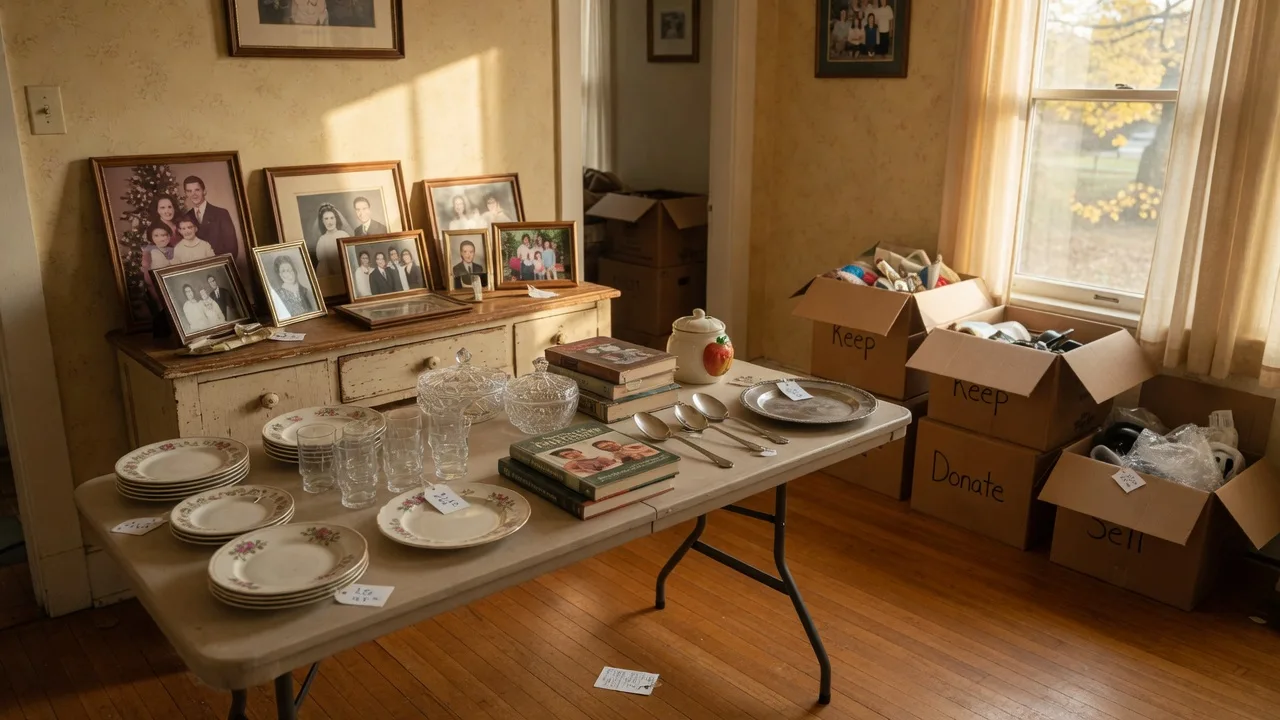
A family home in Northwest Indiana often holds decades of belongings, and deciding what happens to them can feel overwhelming. This guide walks through the gentle work of sorting a home into keep, donate, and sell piles, and it explains the difference between an estate sale and a garage sale, so families across Lake, Porter, and LaPorte counties can clear the house with kindness and clarity.
The goal is never to empty a home quickly. The goal is to make decisions that honor the person who lived there and the family members who loved them.
Key Takeaways
- ✓ Set aside legal, financial, and sentimental items before any sale or donation
- ✓ An estate sale is the right choice for a home full of furniture and collectibles, while a garage sale suits a smaller clear-out
- ✓ Donate clothing, housewares, books, and furniture in good condition to local charities across the region
- ✓ Most everyday clothing, used bedding, and older electronics bring little or nothing at a sale
- ✓ Hold the sale before listing the home so the house shows cleaned, emptied, and ready
Sort Into Three Piles Before Anything Else
Before a single item is priced or donated, take the whole house in small passes and sort into three piles: keep, donate, and sell. Start with the smallest and most important circle: legal and financial documents, identification, medications, jewelry, family records, and anything a relative has asked for by name. These should be set aside first and moved to a safe place, because they are the reason the rest of the work can happen calmly.
From there, go room by room and let the three piles fill. The four-box method, one box each for keep, donate, sell, and toss, keeps the work moving and prevents every surface from becoming a maybe pile. Many families in Crown Point, Munster, and Valparaiso find that starting with the least emotional rooms, such as the basement or the guest room, builds momentum before the harder rooms come up.
An Estate Sale or a Garage Sale?
The size of the clear-out usually decides the answer. An estate sale company prices the contents, runs the sale over several days, and handles hundreds or even thousands of items, usually taking a commission in the range of 25 to 40 percent of the proceeds. That trade is worth it when a home is full of furniture, china, tools, art, and collectibles, because the company brings the pricing experience, the buyers, and the labor the family does not have.
A garage sale, on the other hand, keeps the full amount for the family but puts all the work, the pricing, the haggling, and the leftovers on them. It suits a smaller clear-out of everyday household items and a few larger pieces. Our guide to estate sale companies versus a DIY sale compares the two side by side, and our guide to estate sale pricing shows what is worth selling, donating, and keeping.
What Usually Sells, and What Does Not
Expectations are the kindest part of the process. Quality furniture, vintage and antique pieces, collectibles, tools, and well-known brands tend to sell. Everyday clothing, used bedding, older electronics, and most mass-produced decor bring little or nothing. A reasonable goal is to clear the house, not to recover retail value for every object, and most families are surprised at how quickly the relief of letting go outweighs the money left on the table.
Donate Generously, and Know Where It Goes
Clothing, housewares, books, and furniture in good condition are welcomed by local charities and thrift organizations across Lake, Porter, and LaPorte counties, and many offer pickup for larger pieces. Household chemicals, paint, and expired medications cannot go to a thrift store and need safe disposal through your town's household hazardous waste program or a pharmacy take-back event. Donating well, with the item clean and in working order, lets a loved one's belongings begin a useful second life.
Time the Sale Around the Home Sale
Most families hold the estate sale before listing the home, so the house shows emptied, cleaned, and ready for photos and showings. If the home is being sold through probate, the personal representative controls the contents, so check that authority before anything is priced. Our guide to preparing an inherited home for sale covers the full checklist, from clearing the contents to the first repairs.
"Clearing a family home is not about getting rid of a lifetime. It is about making a lifetime's worth of decisions gently, one pile at a time, so the family can keep what matters and let the rest go with love."
The Golden Girls of Real Estate
Related Resources
Estate Sale Pricing a practical guide to what is worth selling, donating, and keeping. Estate Sale Company vs. DIY the costs, the work, and the right fit for your family. Preparing an Inherited Home for Sale the full checklist for adult children. Contact the Golden Girls for local estate sale companies and move managers we trust.
For broader guidance on planning for a loved one's later years, AARP and the official State of Indiana website offer useful, plain-language resources for seniors and their families.