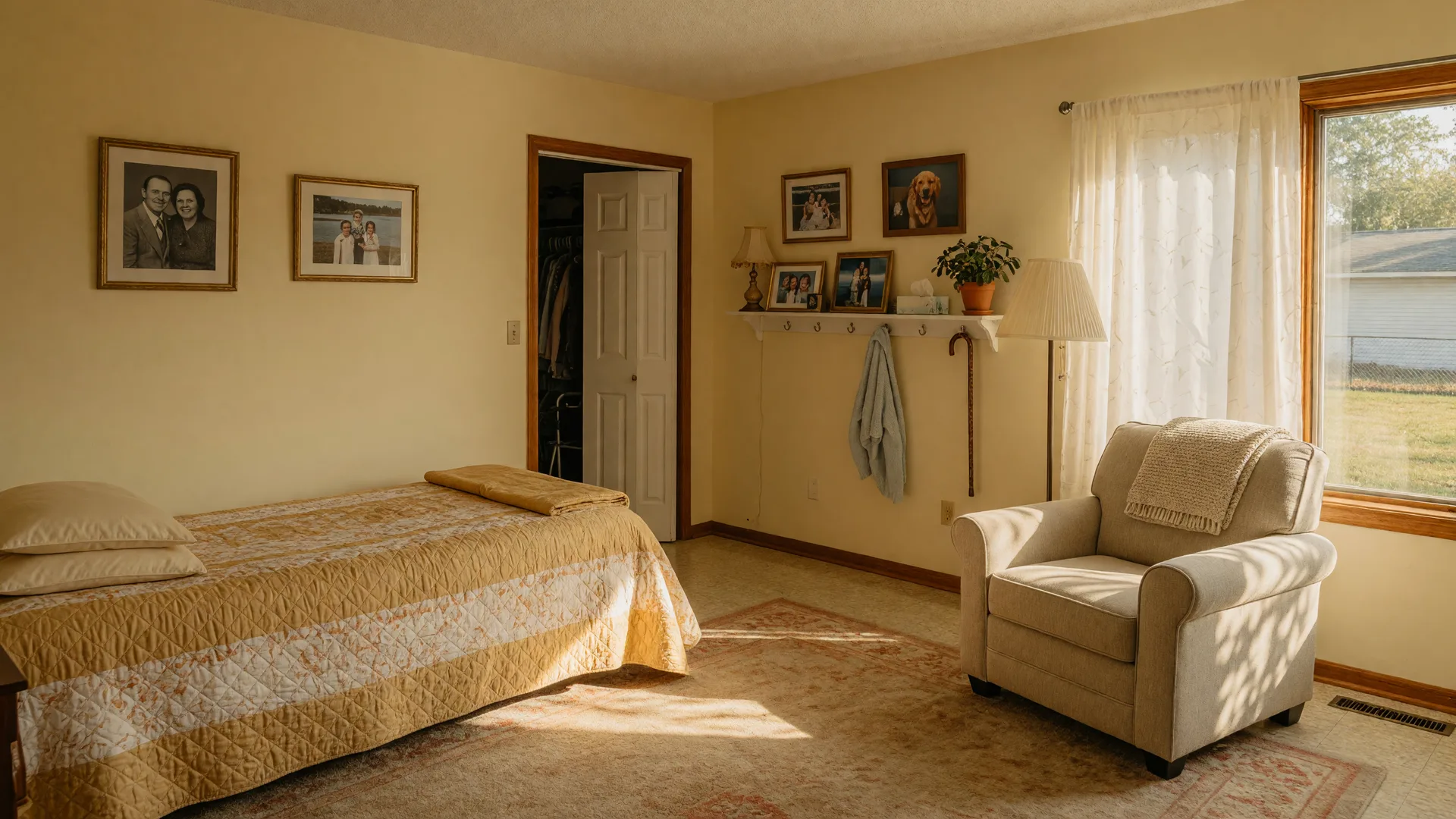
More Northwest Indiana families are welcoming an aging parent into their existing home instead of buying a new one, and it can be one of the most practical and loving arrangements a family makes. This guide covers what to plan before a parent moves in with you, from space and safety to money and written agreements, so the shared household starts strong across Lake, Porter, and LaPorte counties.
As a team that works with multigenerational families daily, the Golden Girls of Real Estate hear the same story year after year: a widowed mom in Munster, a dad in Highland whose stairs are getting harder, grandparents in Crown Point who want to be closer to grandchildren. The home you already own may be the right answer, with planning. Here is how to make it work.
Key Takeaways
- ✓Start with a genuine conversation about how the arrangement will feel, not just where the furniture will go
- ✓Plan for a ground-floor bedroom and bathroom, wide doorways, good lighting, and safety upgrades before move-in day
- ✓Write down the money agreement, rent or no rent, so no one resents the arrangement six months in
- ✓A short written family agreement and an updated power of attorney prevent the questions nobody wants to ask later
- ✓Agree on how the arrangement can end gracefully if it stops working, for everyone's dignity
Start With a Real Conversation, Not a Plan
Invite the conversation before the crisis. Ask your parent what they need, what they fear, and what they would miss about their own home. Listen for the real answers: independence, privacy, friends, a familiar kitchen. Then talk about your own household's habits honestly. Who cooks, who hosts, and what time does the house wake up? A parent who moves in expecting a quiet retreat while three grandchildren rule the mornings needs to know that before the boxes arrive.
If a parent is resisting the idea entirely, our guide to when a parent says no to moving offers a compassionate path forward, and our guide to talking with aging parents about big decisions keeps the dialogue kind.
The Space: What a Parent Actually Needs at Home
The single most valuable change is a bedroom and bathroom on the main floor. If your home has a living room, a den, or a dining room that is rarely used, that space can become a comfortable suite. Look for a route from bed to bath to kitchen that avoids stairs and tight turns. A walk-in shower with a seat, grab bars by the toilet and shower, brighter hallway lighting, and lever handles instead of knobs make a huge difference. Our room-by-room safety audit walks through every space, and our guide to senior home safety modifications, grants, and contractors explains how to fund and hire the work.
Homes in Munster, Crown Point, and Highland adapt differently. A ranch with a spare bedroom and an existing main-floor bath is the easiest start, while a two-story home may need a stair lift or a converted first-floor room. Walk your floor plan with fresh eyes, sit in the chair your parent would use, and measure the doorways. If the numbers do not fit, our guide to multigenerational homes in Northwest Indiana compares homes already built to evolve.
The Money: Rent, Help, and the Family Home
Money is the least comfortable topic and the most important one. Some families charge a modest, fair-market rent; others take no rent and agree that the parent contributes to groceries or utilities; others share nothing but document everything by a written plan. None of these is wrong, but the choice must be explicit. Write it down, revisit it once a year, and keep the conversation separate from the daily kindness.
For many families, the parent's own home funds the arrangement. Selling the family home can pay for the move, the renovations, and years of contributed household costs, while removing the taxes, insurance, and upkeep of a second property. Our guide to using a home sale to fund retirement shows how the numbers work, and a no-pressure market analysis from the Golden Girls can put a real value on the current home before the family decides. Reach us any time through the contact page.
The Paperwork: Small Agreements Prevent Big Fights
Before move-in day, put three things on paper: a simple family agreement describing the arrangement and the money, an updated power of attorney that covers health and finances, and a clear note about the parent's own home, whether it will be sold, rented, or held. An elder law attorney can draft these quickly, and our guide to estate planning and real estate in Indiana explains which documents matter for the home itself.
The paperwork is not about distrust; it is about clarity. Siblings who live out of state deserve to know the plan in writing too, so nothing is interpreted as favoritism. Families who write things down tell us the holidays stay warm precisely because the hard conversations already happened with a notary present.
Safety First, Comfort Second
Do the safety work before the move, not after a fall. Test every light switch from the front door to the bedroom, add night lights along the path to the bathroom, and secure loose rugs. Keep pathways wide enough for a walker, and store the things your parent uses daily within easy reach. A home that is safe for a parent is safer for everyone in the household, including visiting grandchildren and holiday crowds.
Beyond the house, arrange the help network before it is needed: a neighbor who checks in, a grocery delivery service, a pharmacy that delivers, and a local senior center in Crown Point or Schererville for social connection. Our guide to community resources for seniors lists the programs across Lake, Porter, and LaPorte counties.
What If It Does Not Work Out?
Plan for the possibility that living together will not work out, for any reason. Keep the parent's finances healthy enough to support an independent option, keep their key documents portable, and name a neutral third party the family can call if tensions rise. Sometimes the honest answer is a beautiful fit; sometimes a parent is better served by a ranch of their own or a 55+ community in Valparaiso. Our guide to making multigenerational living work compares the options fairly, with no pressure attached.
"We have watched families thrive under one roof, and we have watched them struggle. The difference is almost never the size of the house. It is the honesty of the plan: the space, the money, and the words on paper."
The Golden Girls of Real Estate
Related Resources
Room-by-Room Safety Audit walk every space in the home before move-in day. Multigenerational Homes in Northwest Indiana floor plans and communities designed for shared living. Estate Planning and Real Estate in Indiana the documents that protect the home and the family. Highland Community Guide ranch homes and walkable neighborhoods for the whole family. Contact the Golden Girls to plan the move and the family home sale together.
For trusted family caregiving help, the AARP Caregiving resource center offers guides and checklists, and the National Council on Aging publishes programs that help older adults and their families plan ahead.